Reflection · Founder's notes
Wellness is not biohacking.
A conversation with Zach Bush, MD challenged how I think about wellness. I didn't walk away with a new protocol. I walked away questioning how we define health in the first place.
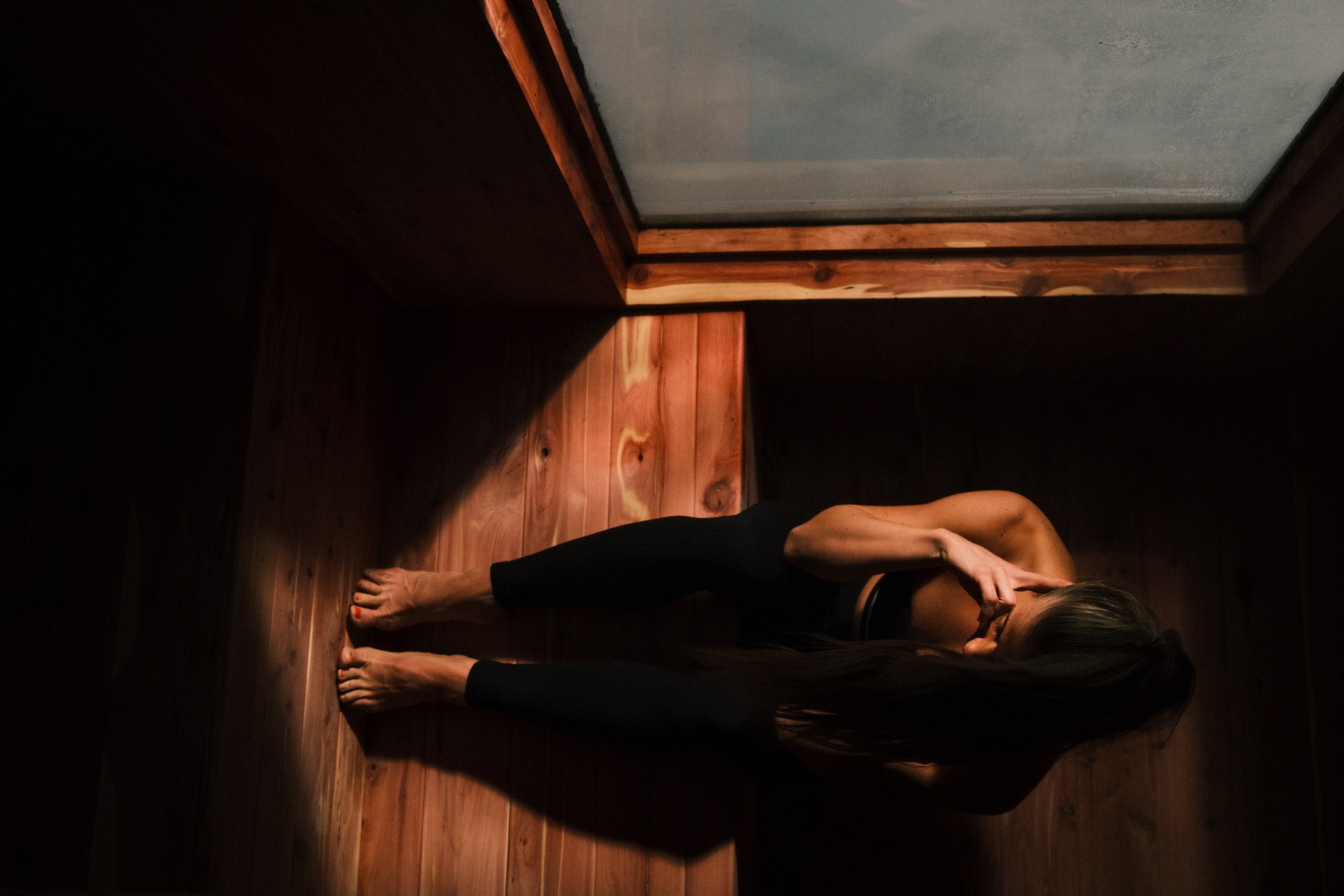
I recently listened to Joe Rogan's conversation with Zach Bush, MD, and one idea has stayed with me ever since.
Nature doesn't see endings.
It sees cycles.
When we look at the world today, it's easy to feel like everything is falling apart. Technology is moving faster than we can comprehend. AI is reshaping work. Communities feel more divided. The future feels uncertain.
Nature has seen uncertainty before.
Forests burn. Rivers change course. Species disappear while others emerge. Ecosystems are constantly reorganizing themselves. What looks like chaos from up close is often transformation when viewed over time.
That perspective made me stop asking how we fix the world and start asking a different question.
What if wellness isn't about fixing ourselves?
What if it's about remembering we're part of something much bigger?
⸻
One story from the conversation helped put words to that feeling. Bush described his research in cancer and how, when communication within a living system breaks down, cells can begin acting apart from the whole. The biology is far more complex than that single observation, but the metaphor felt incredibly relevant.
The human body only works because billions of cells cooperate. Every cell has a role, but none exist purely for themselves. The health of one depends on the health of the whole.
I wonder if we've forgotten that.
We've never been more connected globally, yet many of us have never felt more disconnected locally.
We know what's happening on the other side of the world before we know our neighbor's name. We carry the emotional weight of wars, politics, algorithms and headlines that sit almost entirely outside our control. It's no wonder so many people feel anxious. We're trying to process a world our minds were never designed to hold all at once.
Something that's helped me cope is bringing my attention back home.
Not because global issues don't matter, but because my greatest responsibility lives much closer than that.
It starts with my family.
My community.
The land around me.
The conversations I'm having.
The work I'm doing.
Each of us has a small garden to tend before we worry about the entire forest.
⸻
That idea became even more real to me when I spent time deep in the Peruvian Amazon.
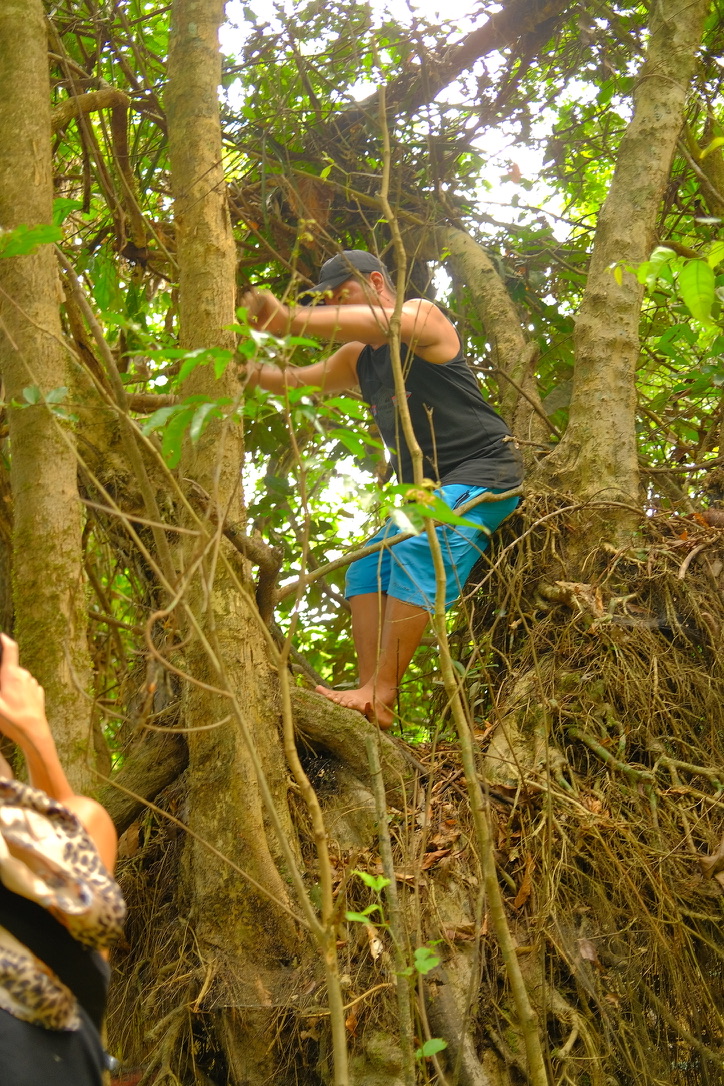
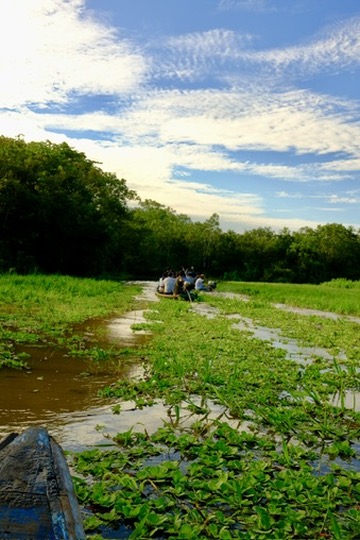
What struck me wasn't how different life looked. It was how different the relationship looked.
The land wasn't viewed as property.
It was something people belonged to.
Community wasn't another calendar event. It was woven into everyday life. There were traditions, rhythms and rites of passage that quietly guided how people moved through the world. Sunrise and sunset weren't just times of day. They carried a sense of reverence. The forest wasn't simply a resource. It was part of the family.
While I was there, I heard a saying I'll probably never forget:
If something hasn't been passed down for 300 years, maybe it hasn't earned our trust yet.
I don't know if that's literally true, but I think there's wisdom in it.
Tradition creates stability.
Progress creates possibility.
We need both.
I don't want to romanticize the past. Every civilization has its strengths and its failures. Modern life has given us extraordinary things, and I wouldn't trade them.
But I also don't think progress requires us to abandon our roots.
Somewhere along the way we've become incredibly good at producing while quietly letting go of many of the things that once grounded us: shared rituals, connection to place, community and a sense of belonging.
Maybe that's why so many of us feel isolated.
Not because we've progressed too far.
But because we've confused progress with leaving our roots behind.
Keep reading
All posts →
FAQ
Common questions.
What is this piece about?
The case for building the practice into your life rather than driving to it.
Does having one at home actually change usage?
That is the whole argument. Convenience is what turns intention into habit.
What does it take to own one?
A level pad, power, and a model that fits. The process covers the rest.
Where can I read more?
Contrast therapy explains the practice itself.
How do I start?
Request a quote or call +1 385-526-2385.
Keep exploring.
Take the product quiz
Three minutes to find the right sauna and cold plunge for your space.
Browse the lineup
Hand-built saunas and cold-plunge suites across three tiers. From $26k.
The Craft
Engineered plans, sauna-grade materials, and how we build to last.
Owner stories
Real saunas and cold plunges installed in real backyards.
FAQs
Timeline, cost, permits, delivery, warranty. Straight answers.
Request a quote
Pick your model and finishes. Cole follows up within 2 business days.